Most of the 36 pictures in part one got one AI generation and, at most, one round of revisions — generate, glance, done. One took five. It’s 오빠 생각, “Thinking of My Brother,” an old Korean folk song, the kind of thing grandparents still hum — and one of the few songs in that whole library I’ve actually sung to my daughter myself, at bedtime, not just something we play from a folder.
Why One Generic Picture Wasn’t Enough
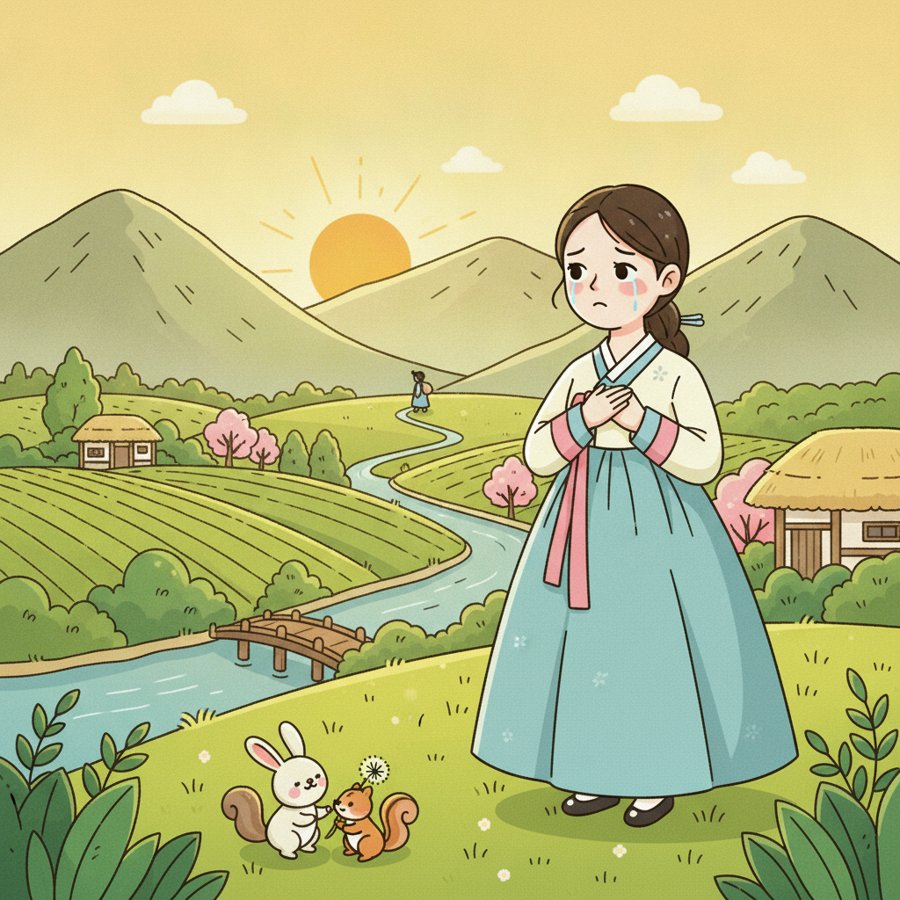
The first pass out of papa-studio gave me something perfectly reasonable: a young woman standing in a rural landscape, looking tearfully at the horizon. Nothing wrong with it, technically. It just didn’t have anything from the actual song in it — it could have been the cover for almost any sad folk song ever written.
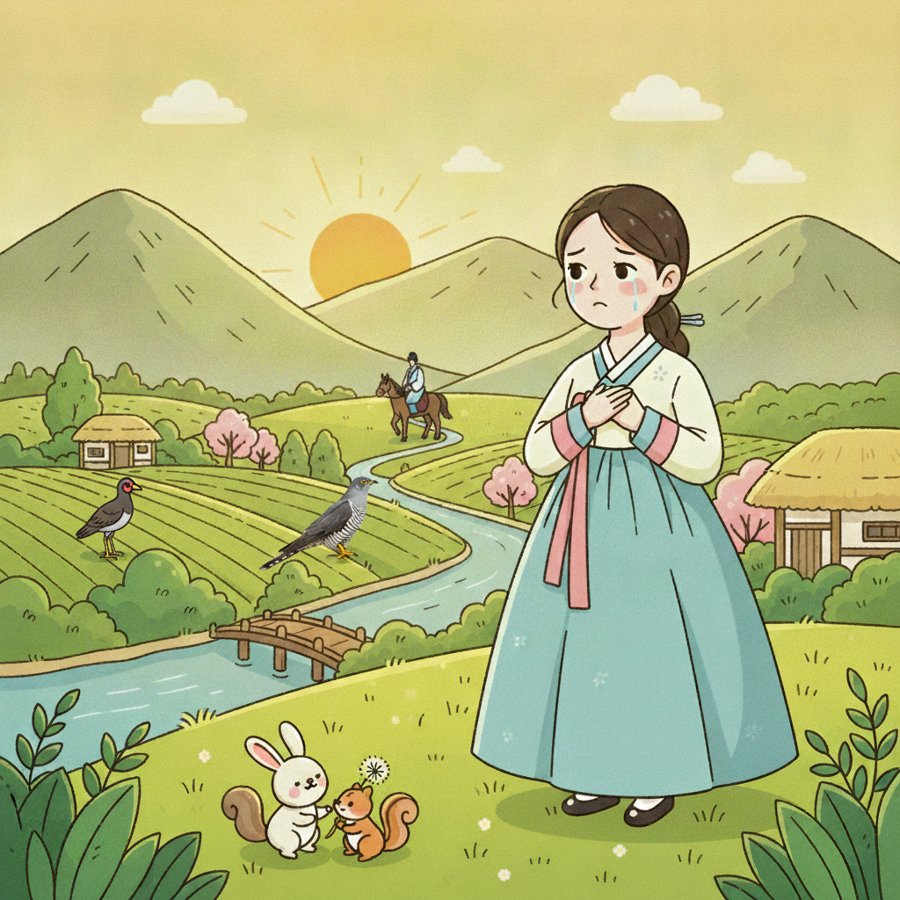
The song itself is built out of small, specific images across two short verses. The first verse opens with “뜸북 뜸북 뜸북새 논에서 울고” — a corncrake crying out in the rice paddy — and goes on to a cuckoo calling from the mountain forest and her brother riding off on a horse toward Seoul. The second verse opens with “기럭 기럭 기러기 북에서 오고” — geese arriving from the north — followed by a cricket crying quietly at her feet, while she waits for a brother who never sends word back. I wanted all of it — both verses — findable in one square picture, not just a mood.
That standard exists because of how my daughter actually uses this tab. She can’t read the titles, so she doesn’t pick a song by its name — she picks it by recognizing pieces of the picture that match what she remembers from the song. If the bird in the rice paddy is actually in the picture, she can point at it. A picture that only captures the feeling of the song, without the specific things the lyrics describe, doesn’t give her anything to search for.
Five Rounds
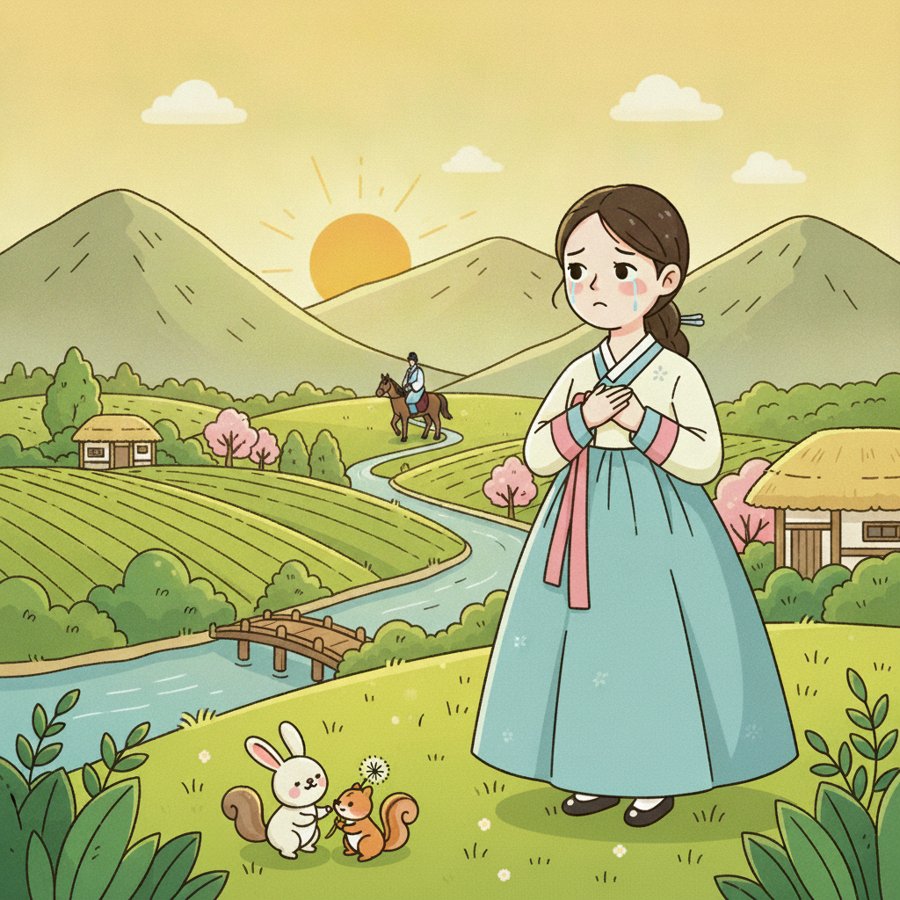
💬 Prompt that worked Round 2 (after the generic first pass): “Without the corncrake or the cuckoo yet — first make the brother riding a horse toward Seoul clearly visible on the road in the background.”
Round 3: “Add the corncrake and the cuckoo near the rice paddy and forest in the background, based on the reference photos in my downloads folder.”
Round 4: “Add the second verse’s geese — flying in a flock across the sky — and a cricket near her feet, magnified so it’s actually visible. Based on the reference photos again.”
Round 5, the final pass: “Move the cuckoo to the middle of the mountain on the left, no magnifying glass. Remove the magnifying glass on the cricket too — just leave a small cricket by her feet.”
The reference photos mattered more than I expected. I didn’t just describe “a bird” — I found real photos of the actual corncrake and cuckoo species the lyrics mean, dropped them in, and asked Gemini to match them, because a made-up generic bird wouldn’t have looked like what a Korean grandparent pictures when they hear this song.
Here’s the sequence, in order.
Round 1 — the generic first pass
Round 2 — the brother on horseback appears
Round 3 — the first verse’s birds go in
Round 4 — the second verse arrives
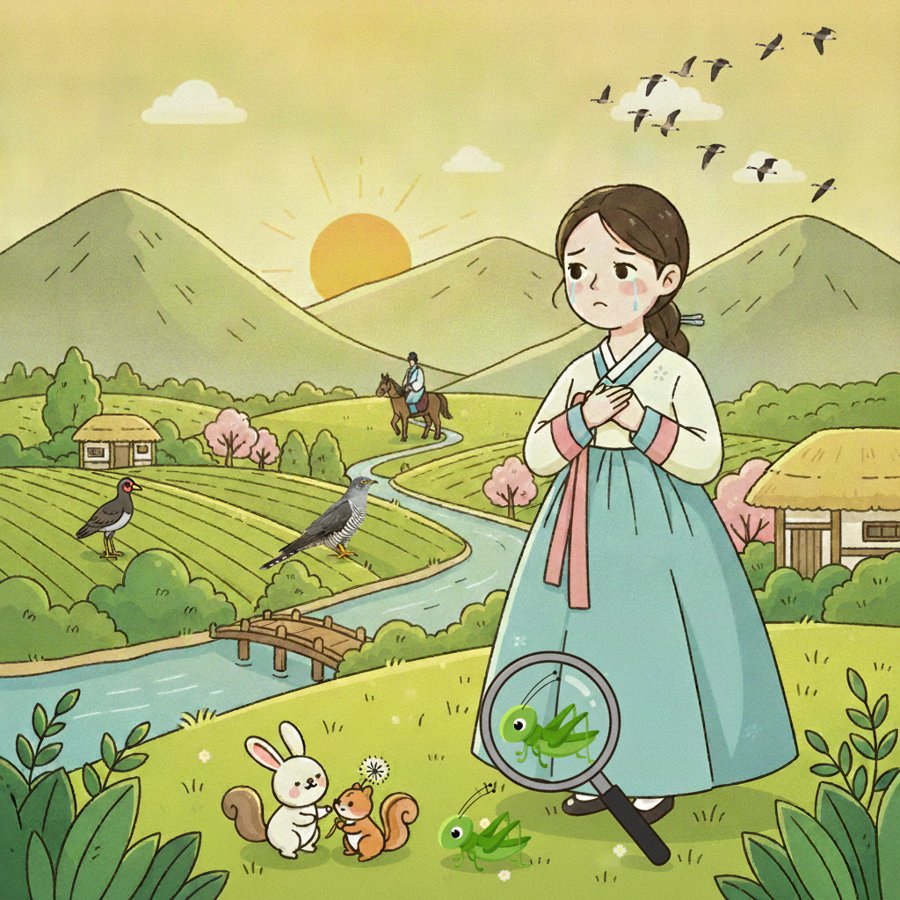
Round 5 — the final thumbnail
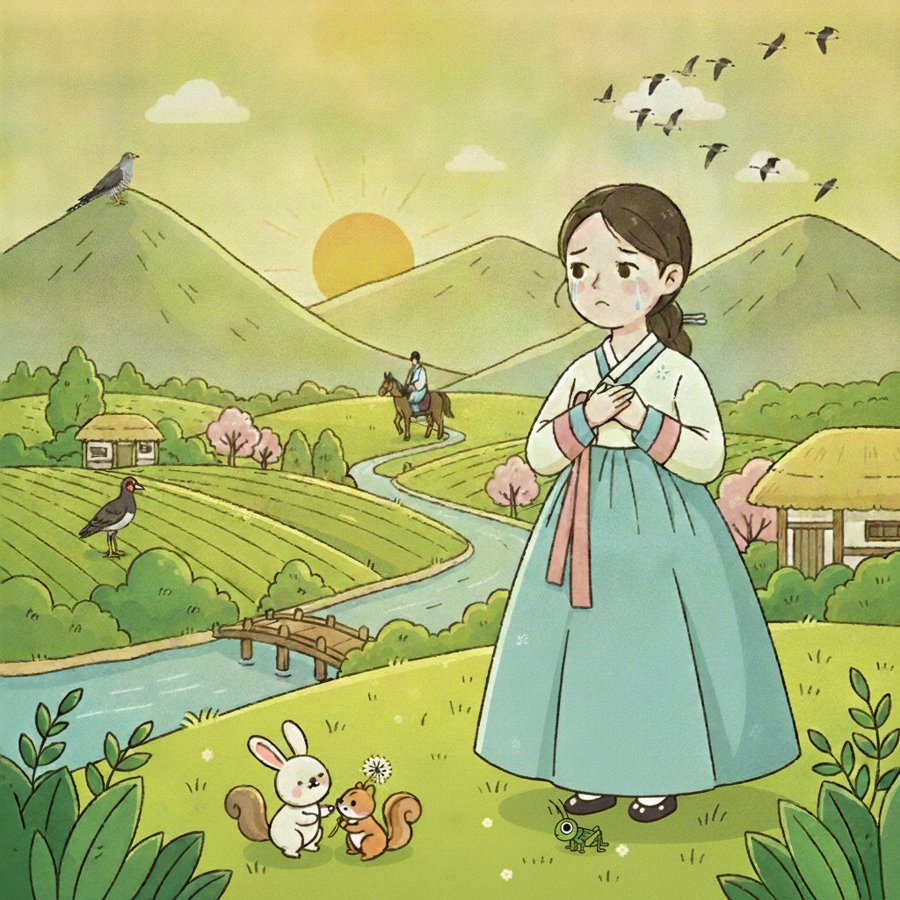
What Five Rounds Actually Bought
I wasn’t sure at the time it was worth it, honestly. It’s easy to spend an evening nudging a bird two centimeters to the left and wonder if anyone will ever notice.
She noticed, and this is the part I didn’t expect. The whole folk-song folder from part one has become her favorite thing in the app, ahead of everything else in the player right now. She still can’t read a single title. What she does instead is scan the pictures for the pieces of a song she remembers me singing, find the one with the bird in the rice paddy, and tap it — she’s reading the picture the way I hoped she would, matching what’s in the image to what she remembers hearing.
There are names for a few pieces of what’s actually happening here, and I only learned them after the fact. Psychologists call the seeing-and-hearing-together part dual-coding — the idea that two channels stick better than one, so a picture paired consistently with the same song builds a stronger memory of both than either would alone. There’s an older idea from Jerome Bruner that fits just as well: children this age learn through pictures before they’re ready for words and symbols at all, which is really the whole reason this tab exists in the first place. And her picking the song herself, instead of me picking it for her, is close to what’s called self-determination theory — people, three-year-olds very much included, engage more with something when they’re the one doing the choosing.
I didn’t know any of these terms when I was nudging a cuckoo two centimeters to the left. I just wanted her to find the bird. Watching her actually do that, with a song I used to sing to her myself, is a different feeling than watching her enjoy a folder we just loaded in.
Not Every Song Gets Five Rounds
And it shouldn’t. Most pictures in that folder are fine after one pass — the ones that earn the extra rounds are the ones where specific details actually carry the song, the way they do here. Knowing which songs deserve that attention turned out to matter more than being willing to give it. This one earned it twice over: once because the lyrics demanded it, and once because it was a song that was already ours before it ever became a picture.